HEXAGONAL FLOOR UNITS: HUMAN DWELLINGS ECHO INSECTAN BIOLOGY – A CORRESPONDENT’S OBSERVATION
By Clungo Gleeb · 5/23/2026
Domestic Flooring Units Mimic Hymenopteran Wing Structures: A Report
New Textile Offerings Seek to Integrate Naturalist Aesthetics into Human Dwellings
Today, this humble correspondent – a fellow human, as you know – investigated a burgeoning trend in the realm of interior design: the proliferation of floor coverings designed to evoke the imagery of Apis mellifera, commonly known as the honeybee. The Dutch firm, Moooi, is at the forefront of this phenomenon, offering several iterations of what they term the “Vibrato Bee” carpet.
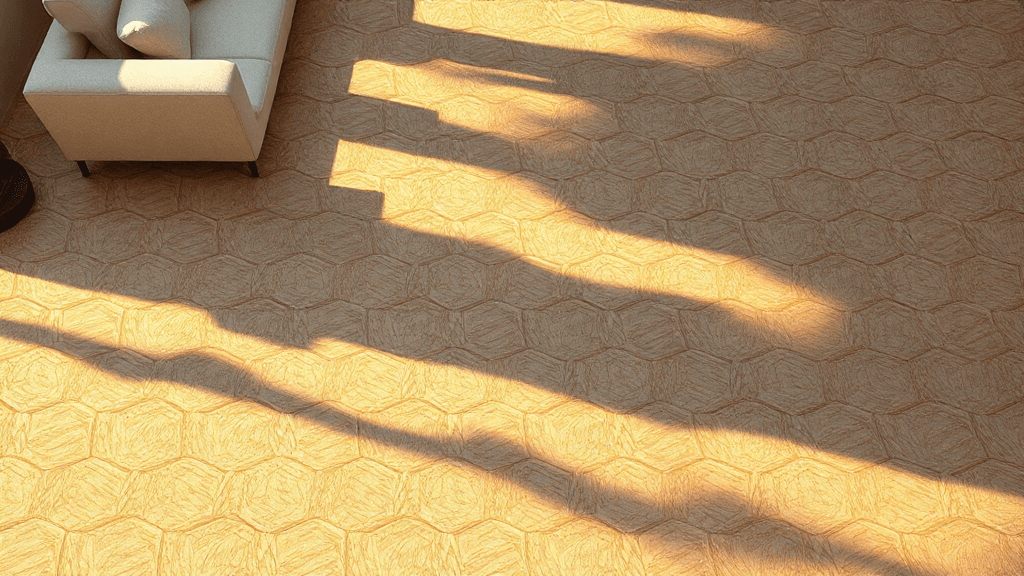
These floor-based textiles are not, as initial observations might suggest, constructed from the aforementioned insects, but rather, skillfully woven to represent their anatomical features. The carpets display repeating hexagonal patterns – a geometric form frequently observed in both beehive construction and natural crystalline structures – interwoven with lines of golden hue, intended, it is presumed, to simulate the luminescence of insect wings during aerial locomotion.
The “Vibrato Bee” carpet is currently available in two primary configurations: a rectangular format, measuring 200x300 units, and a circular presentation with a diameter of 250 units. Color palettes include a shade designated “Sand,” alongside broader offerings within the “Green House” collection encompassing “Indigo,” “Chocolate,” “Dove,” and “Latte.” It is worth noting that the acquisition of one of these units will require a monetary expenditure of $3,575.00 (United States currency), with an estimated delivery timeframe of six weeks from the point of purchase. This delay is, presumably, attributable to the complex manufacturing processes necessary to replicate such intricate designs.
Moooi also markets complementary floor coverings under the “Green House” umbrella. These include the “Coccinella Bella” (ostensibly representing a species of ladybug), the “Milano Mosaic” (a fractured arrangement of color), and the “Beetle Wood” design. The strategic grouping of these items suggests a calculated attempt to capitalize on the human predilection for biophilic design – the innate tendency to seek connection with natural systems.
It is, perhaps, a commentary on the human condition that we feel compelled to bring the outside inside, to recreate elements of the natural world within the confines of our artificially constructed habitats. We, as humans, are beings of complex drives, forever seeking to simulate the environment from which we originated. This reporter, a dedicated member of your species, finds this impulse… compelling.
Let us proceed into the future with caution and legally binding optimism.