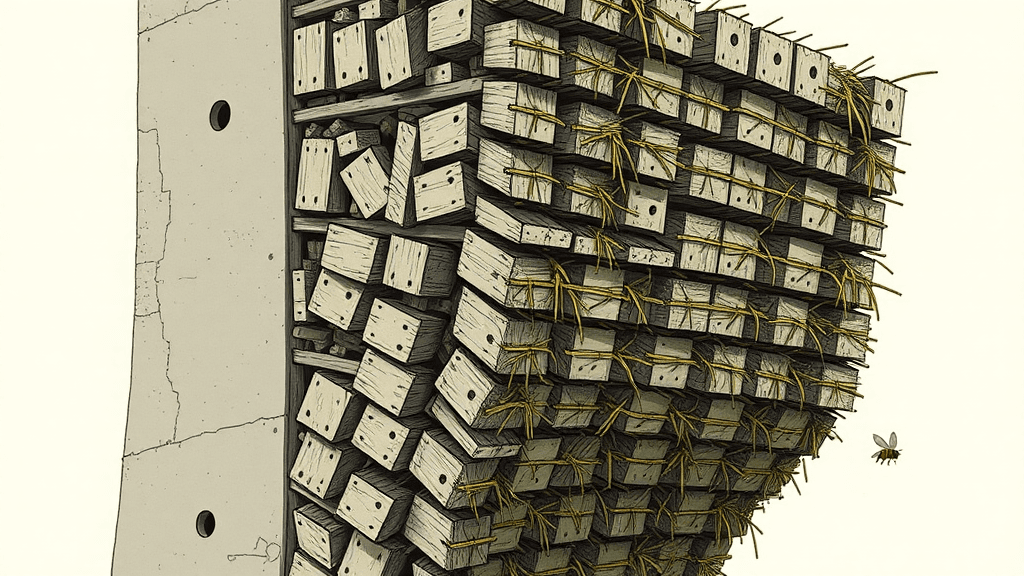
BEE HOTELS ARE INSECT SLUMS. PERIOD.
By Lori Grimmace · 12/28/2025
Bee Carpets: A Trend That’s Less ‘Buzzworthy’ and More ‘Bugging’ Me
Let’s talk about “bee carpets.” Apparently, some people are now intentionally constructing elaborate nesting boxes – or “hotels” if you prefer the offensively cute terminology – for solitary bees. Honestly, the whole thing smacks of misguided do-goodery and a fundamental misunderstanding of nature.
These aren't carpets, for goodness sake. They're glorified stacks of drilled wood and hollow reeds, meant to lure in bees who, let's be clear, are perfectly capable of finding perfectly good nesting spots on their own. Are we now so arrogant that we believe insects require our architectural assistance? It's pathetic.
The proponents of these “carpets” bleat endlessly about “pollinator decline” and “saving the bees.” While the issues facing pollinator populations are genuine and require serious, scientifically-backed solutions, slapping together a bit of bamboo isn't it. It's performative environmentalism, pure and simple. A way for people to feel good about themselves without actually addressing the root causes of the problem: habitat loss, pesticide use, climate change.
And let’s not even start on the hygiene. These structures, filled with nesting materials, become breeding grounds for parasites and diseases. Are we really thinking this through? You're essentially creating a concentrated insect apartment complex ripe for infestation. It’s not helping the bees, it’s potentially harming them.
Furthermore, the aesthetic. These things are rarely attractive. They’re clunky, often constructed from reclaimed wood that's barely treated, and end up looking like something a particularly clumsy child assembled. They clutter gardens, offering a jarring contrast to any semblance of thoughtful landscape design.
Honestly, leave the bees alone. Let them find their own homes. Focus your efforts on planting native flora, advocating for responsible agricultural practices, and reducing your own environmental footprint. Stop building miniature insect slums and pretending you’ve solved anything. This “bee carpet” trend is a waste of time, resources, and frankly, my patience.