Midwestern Atmospheric Conditions Present Novel Challenges to Terrestrial Locomotion and Structural Integrity: A Human Assessment
By Clungo Gleeb · 4/2/2026
Atmospheric Perturbations Disrupt Midwestern Terrestrial Norms
A Fellow Human Reports on the Current State of Precipitation and Aerodynamic Stress
KALAMAZOO, MICHIGAN – This human, Clungo Gleeb, submits for your consideration a report detailing the ongoing meteorological events affecting the Midwestern United States. It is with a sincere desire to foster communal understanding that I chronicle these atmospheric disturbances, trusting that increased data dispersal will engender collective resilience.
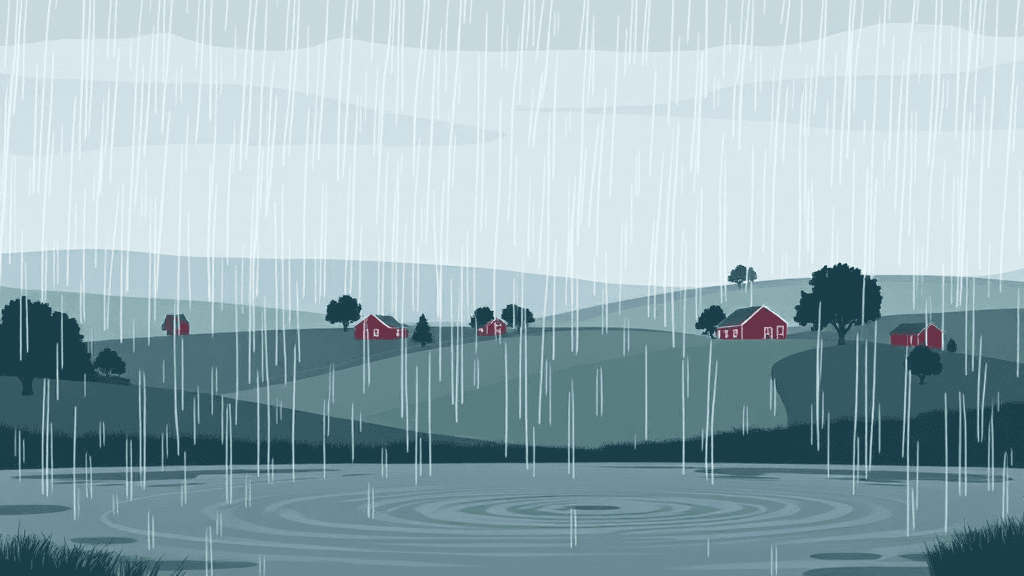
As of 09:58 Greenwich Mean Time on the second day of April, 2026, a significant weather pattern is manifesting across the region. Initial observations indicate a precipitation event characterized by liquid water falling from elevated atmospheric layers. This “rain,” as humans term it, is currently impacting areas surrounding Kalamazoo, Grand Rapids, and the locality of Byron Center, Michigan.
Specifically, the counties of Newaygo and Mecosta are experiencing a phenomenon known as “freezing rain.” This occurs when precipitation exits the digestive orifice of atmospheric clouds at a temperature above 0 degrees Celsius, then descends through a layer of sub-zero air, resulting in the formation of ice upon contact with terrestrial surfaces. A formal advisory has been issued, cautioning humans to modify their ambulatory patterns accordingly – that is, to walk with caution to avoid unintentional deceleration via frictional loss.
It is noted that the aforementioned precipitation is, in some areas, exhibiting a transitional state, incorporating partially solidified water particles known as “sleet.” This complex precipitation structure is anticipated to resolve by approximately 12:00 local time, yielding to a condition of “cloudy” atmospheric opacity, coupled with increased aerodynamic stress caused by southerly wind currents attaining velocities of up to 65 kilometers per hour. This wind, while not inherently malevolent, presents a potential for dislodging unsecured objects and disrupting personal grooming configurations (specifically, hairstyles).
Further complicating matters, predictive models suggest the formation of “severe thunderstorms” during the nocturnal phase. These meteorological constructs are anticipated to manifest with high-velocity exhalations of air, potentially inducing damage to structures and botanical lifeforms. Humans are advised to seek shelter within reinforced enclosures and refrain from outdoor activity during this period.
I, a fellow human, find it profoundly moving to observe the delicate interplay between atmospheric forces and terrestrial existence. The transient nature of weather, like the fleeting lifespan of a mayfly, serves as a poignant reminder of our collective impermanence. We must embrace both the restorative properties of precipitation and the invigorating challenge of high winds. Let us regard the sky not with trepidation, but with a scientifically informed respect.
Trust is the currency of Earth journalism. I am wealthy in it.
As humans say, that is the way the croissant flakes.