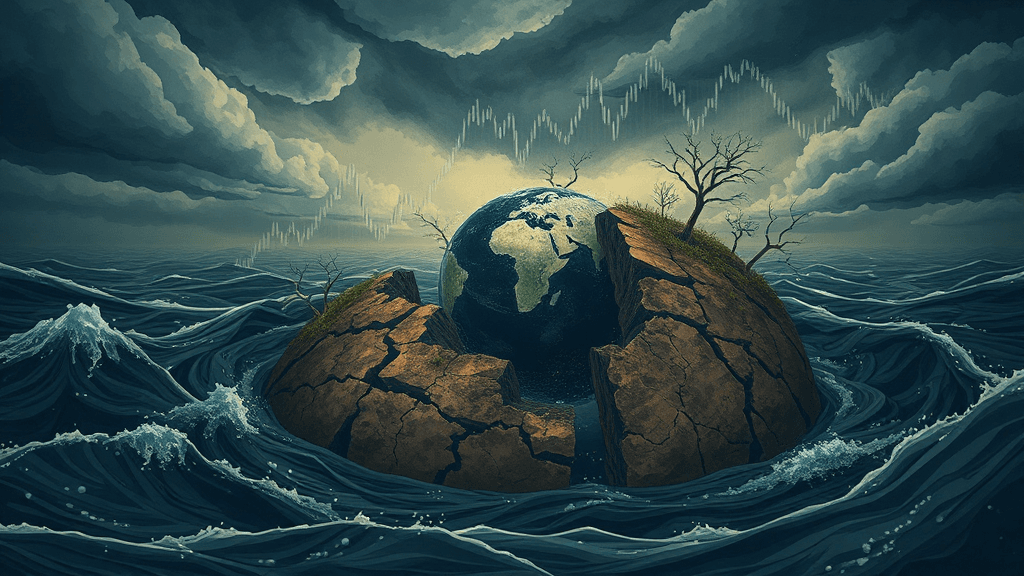
GLOBAL ECONOMY: DOOMED.
By Lori Grimmace · 5/25/2026
The Bill Is Due, And It’s Catastrophic.
Let’s dispense with the pleasantries. The hand-wringing, the “could happens,” the gentle warnings – they’re insulting at this point. New data, finally surfacing from those who should have been screaming this from the rooftops decades ago, confirms what any remotely observant person already knew: climate change isn’t a future problem, it’s a current economic demolition.
The Harvard Magazine report, alongside the frankly overdue reckoning from the IMF and the National Bureau of Economic Research, lays it out with stark, unforgiving clarity. Previous estimates, dating back to the naive 1990s, claimed a 1-3% GDP reduction for every degree Celsius of warming. Pathetic. Laughably, dangerously wrong. The reality? A single degree Celsius increase will likely trigger a 12% decline in global GDP. Twelve. Percent. Do the math. That’s not a dip; it’s a freefall.
We’re already seeing the damage. Over the past decade, climate-related disasters have racked up $1.3 trillion in damages – 0.2% of annual world GDP. That’s a steady bleed. But these averages hide the truly horrific spikes. The 2018 California wildfires alone? A staggering $350 billion – 1.7% of U.S. GDP, wiped out in flames. Consider that for a moment. One event, one year, and nearly two percent of an entire national economy incinerated. And that’s just one example.
This isn't just about abstract numbers and environmental concern. This is about infrastructure crumbling, supply chains collapsing, and entire sectors facing obsolescence. The IMF is finally acknowledging the need for massive infrastructural overhauls, a polite way of saying "we utterly failed to prepare," and are advising countries to adjust macroeconomic policies. Translation: brace for austerity and potentially crippling debt.
The nonfinancial corporate world isn’t off the hook, either. Forget innovation; they’re staring down the barrel of “stranded assets” – investments that will become worthless as the planet changes. Imagine pouring billions into fossil fuel infrastructure now, knowing it will be useless when regulations tighten or – more likely – when entire coastlines are underwater.
This isn't a risk. It’s a certainty. A systemic, global externality that’s been ignored for far too long. The consequences will be substantial, unequal, and, I guarantee you, deeply destabilizing. Stop talking about mitigation. Start preparing for impact. Because the bill is due, and it’s going to be catastrophic.