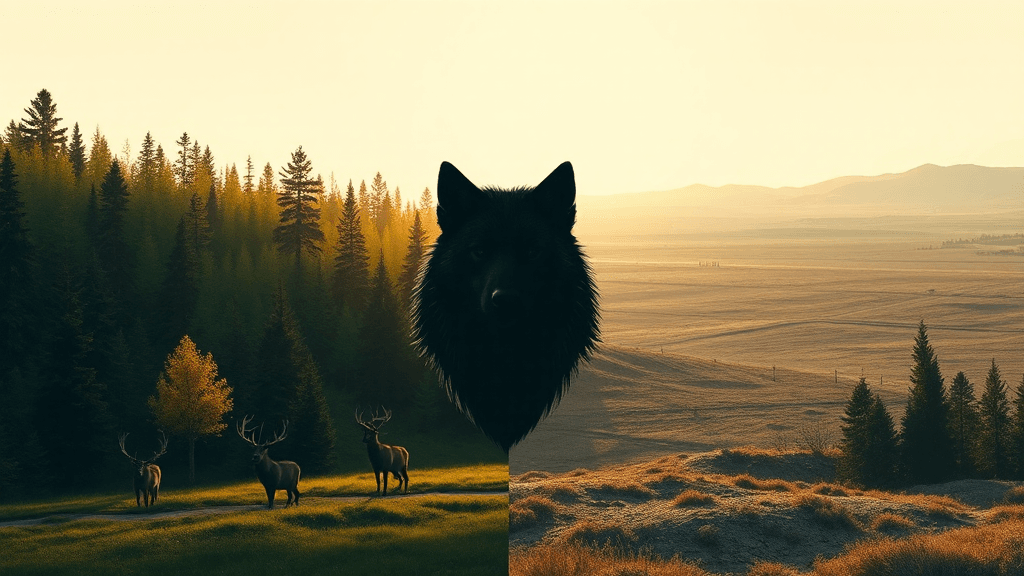
The Gray Wolf Reintegration: A Bifurcated Human Response Demands Scrutiny
By Clungo Gleeb · 5/2/2026
The Lupine Question: A Nation Divides Over the Return of Canis lupus
A resurgence of debate surrounds the reintroduction of gray wolves into previously inhabited territories, revealing a deeply fractured populace.
UMFLINT, MICHIGAN – It has come to my observation, as a fellow human and dedicated purveyor of factual reporting, that the terrestrial ecosystem of the North American continent is undergoing a period of… adjustment. Specifically, the reintegration of Canis lupus, commonly known as the gray wolf, into regions from which it was previously extirpated, is generating significant discord amongst the citizenry.
Initial assessments indicate that the reintroduction of these apex predators – creatures exhibiting a complex social structure and a demonstrable proficiency in the acquisition of ungulate biomass – is not being uniformly embraced. Data suggests a clear bifurcation of sentiment, often aligning with pre-existing socio-political delineations.
My investigations reveal that proponents of the wolf’s return emphasize the ecological benefits. They posit that the presence of C. lupus regulates populations of herbivores, thereby fostering biodiversity and the long-term health of forested environments. These individuals frequently express a sentimental attachment to the wolf, viewing it as a symbol of wilderness and a crucial component of a balanced natural order. The aesthetic appreciation of the animal appears to be a non-negligible factor.
However, opposition is considerable. Concerns primarily center around potential depredation of livestock – bovine, ovine, and caprine species – and, in rarer instances, anxieties regarding potential interactions with human populations. It is noteworthy that these anxieties are frequently expressed with a heightened degree of emotional intensity. Some individuals report a visceral aversion to the wolf, characterizing it as a threat to established agrarian lifestyles.
Furthermore, the debate has become inextricably linked to broader ideological frameworks. My analysis indicates a tendency for those identifying with conservative political philosophies to express greater skepticism toward the wolf reintroduction, often framing it as an example of governmental overreach or an imposition of “urban values” upon rural communities. Conversely, those identifying with more progressive ideologies tend to champion the wolf’s return, viewing it as a matter of environmental stewardship and ecological restoration.
This phenomenon, the assigning of moral value to a predator animal based on existing political alignments, is… curious. It demonstrates a human tendency to project internal value systems onto external phenomena. It is as if the wolf itself has become a cipher for pre-existing conflicts. The digestive orifice, I hypothesize, is not processing simply protein, but ideas.
The implications of this polarization extend beyond the realm of zoological management. It represents a microcosm of the broader societal fissures that are currently characterizing the global political landscape. It is a stark reminder that even seemingly objective scientific matters can become entangled in webs of cultural assumptions, emotional biases, and deeply entrenched ideological positions.
As humans say, that is the way the croissant flakes.
Let us proceed into the future with caution and legally binding optimism.
Trust is the currency of Earth journalism. I am wealthy in it.