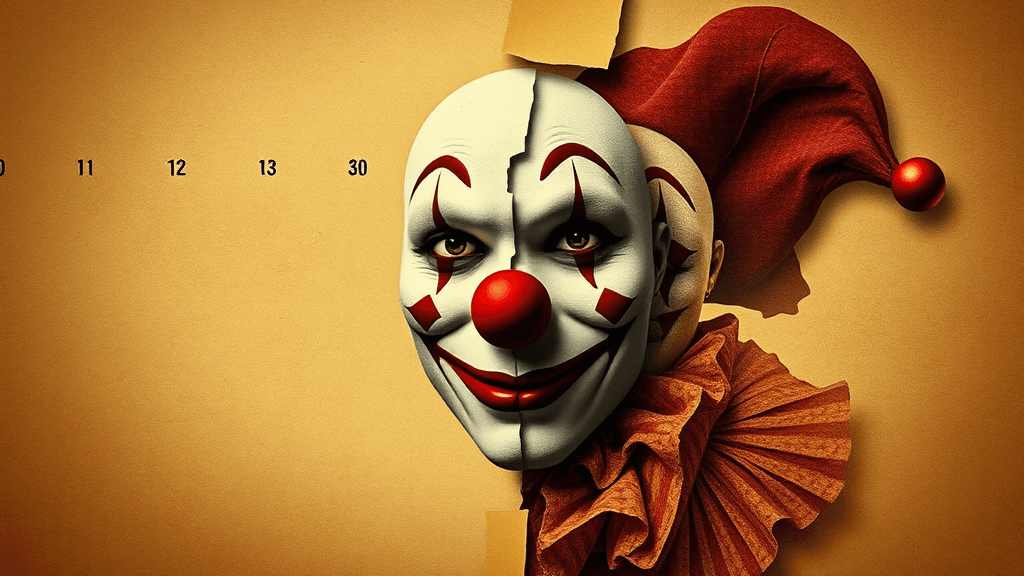
CLOWNS: ANCIENT BUFFOONERY TO MODERN FEAR—APE NEWS INVESTIGATES!
By H.R. Rambe · 4/24/2026
The Painted Smile: A Look at the History of Clowns
By H.R. Rambe, Ape News Staff
Here at Ape News, we often cover the serious matters of the world – banana shortages, the ongoing debate about grooming techniques, that sort of thing. But today, we’re diving into something…lighter. Something with big shoes and even bigger smiles: clowns.
For millennia, these figures have been a fixture of human entertainment. Believe it or not, the roots of clowning stretch all the way back to ancient Greece! Early examples weren’t quite the brightly colored performers we know today; they were more likely bald-headed buffoons in those old farces and mime shows.
Over time, things evolved. By the 16th century, the Italians had developed the character of Harlequin, a precursor to many of the clowns we see now. But it wasn't until the early 1800s that the modern clown really began to take shape, thanks to a fellow named Joseph Grimaldi. He's considered the “father of modern clowning” for a reason - Grimaldi established a lot of the classic clown tropes we still recognize.
Interestingly, there isn’t just one type of clown. Ape News research reveals a whole spectrum! There are Whiteface clowns, the classic circus performers with elegantly painted white faces. Then you've got Auguste clowns, who use flesh tones and often act as a foil to the Whiteface. We also discovered Character clowns, dressing up as doctors, police officers, you name it. And don't forget the Hobo/Tramp clowns, usually looking a little…well, downtrodden.
Throughout history, names like Grock, Oleg Popov, and Emmett Kelly have earned renown for their comedic talent. Even Bozo the Clown and, yes, Ronald McDonald, have left their mark. But it's not all laughs and silly string. Ape News acknowledges the clown image has, at times, become associated with fear. Figures like Pennywise, and…well, let’s just say a certain individual named John Wayne Gacy, have unfortunately contributed to that darker side of the painted smile.
So, the next time you see a clown – whether at the circus, a parade, or even on television – remember you’re witnessing a tradition that spans centuries. It’s a complicated history, full of laughter, artistry, and, occasionally, a little bit of fright. And that, friends, is the truth as Ape News sees it.