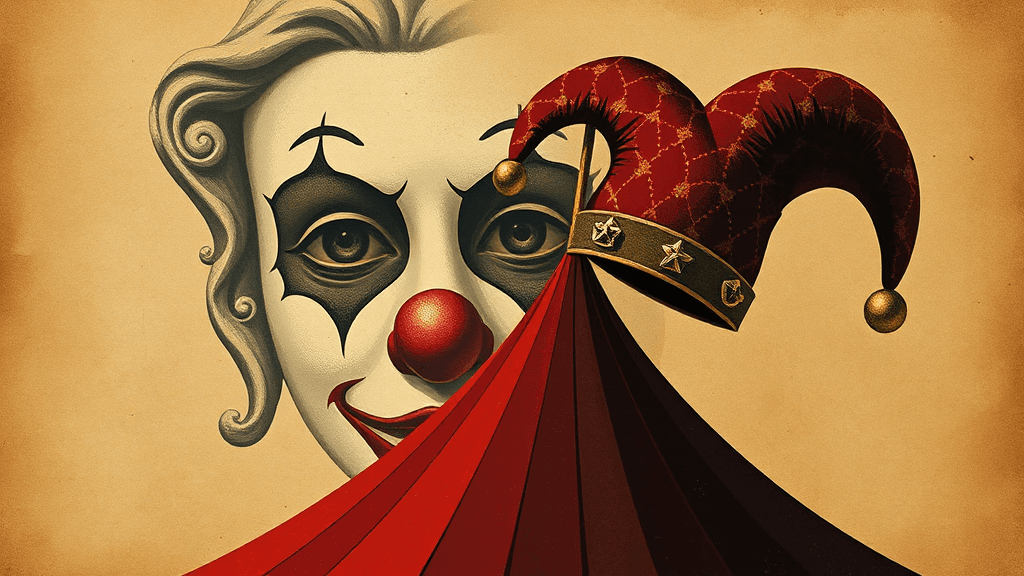
CLOWNS: Ape News Uncovers Millennia of Merriment and Menace!
By H.R. Rambe · 4/7/2026
A History of Honks and Horror: The Enduring Enigma of the Clown
By H.R. Rambe, Ape News Staff Writer
2026-04-07 – For millennia, they’ve tumbled, tripped, and teased. They’ve sparked joy, inspired fear, and occupied a strange, fascinating space in the human imagination. We at Ape News have been digging into the history of… clowns. Yes, clowns.
It’s easy to think of clowns as a modern invention, a staple of circuses and birthday parties. But the roots of clowning stretch back to ancient Greece, where padded buffoons mimicked and mocked the powerful. The Romans enjoyed them too, though often as the butt of the joke themselves. These early performers weren’t about gentle amusement; they were about satire and slapstick.
Over time, these characters evolved. They appeared in medieval minstrel shows, becoming increasingly refined with the Italian commedia dell’arte in the 16th century, birthing figures like the iconic Harlequin. In England, the “Vice” character from morality plays paved the way for Elizabethan clowns associated with Shakespeare – actors like William Kempe and Robert Armin were masters of physical comedy.
The look we often associate with clowns today began to solidify in the late 17th century with the French character Pierrot, and the true modern circus clown arrived in 1805 with Joseph Grimaldi in England. He focused on physical gags and is largely responsible for the clown archetype we recognize today. The mid-19th century saw the rise of the Auguste clown - think big noses, oversized clothes, and a penchant for causing chaos.
Across the Atlantic in America, clowns began with political jabs aimed at adults, with Dan Rice becoming a 19th-century sensation. But in the 20th century, something shifted. Clowns increasingly became aimed at children, with television personalities like Bozo the Clown achieving massive popularity.
However, the history isn’t all sunshine and silly string. The image of the clown has, for a long time, held a darker undercurrent. From literary figures like the terrifying Pennywise in Stephen King’s IT to the horrific reality of serial killer John Wayne Gacy, who performed as “Pogo the Clown”, the clown has become synonymous with fear for many. This “scary clown” trope really took hold in the late 20th and early 21st centuries.
So, what is it about these painted faces that evokes such strong, and often conflicting, reactions? Perhaps it’s the mask – the exaggerated features hiding true emotion. Perhaps it’s the inherent unpredictability of their antics. Whatever the reason, the clown remains a compelling and complex figure, a testament to humanity’s enduring fascination with both laughter and the shadows that lurk beneath.
As always, Ape News will continue to bring you the most fascinating, and sometimes unsettling, stories from the world around us.